
Last updated November 25, 2026
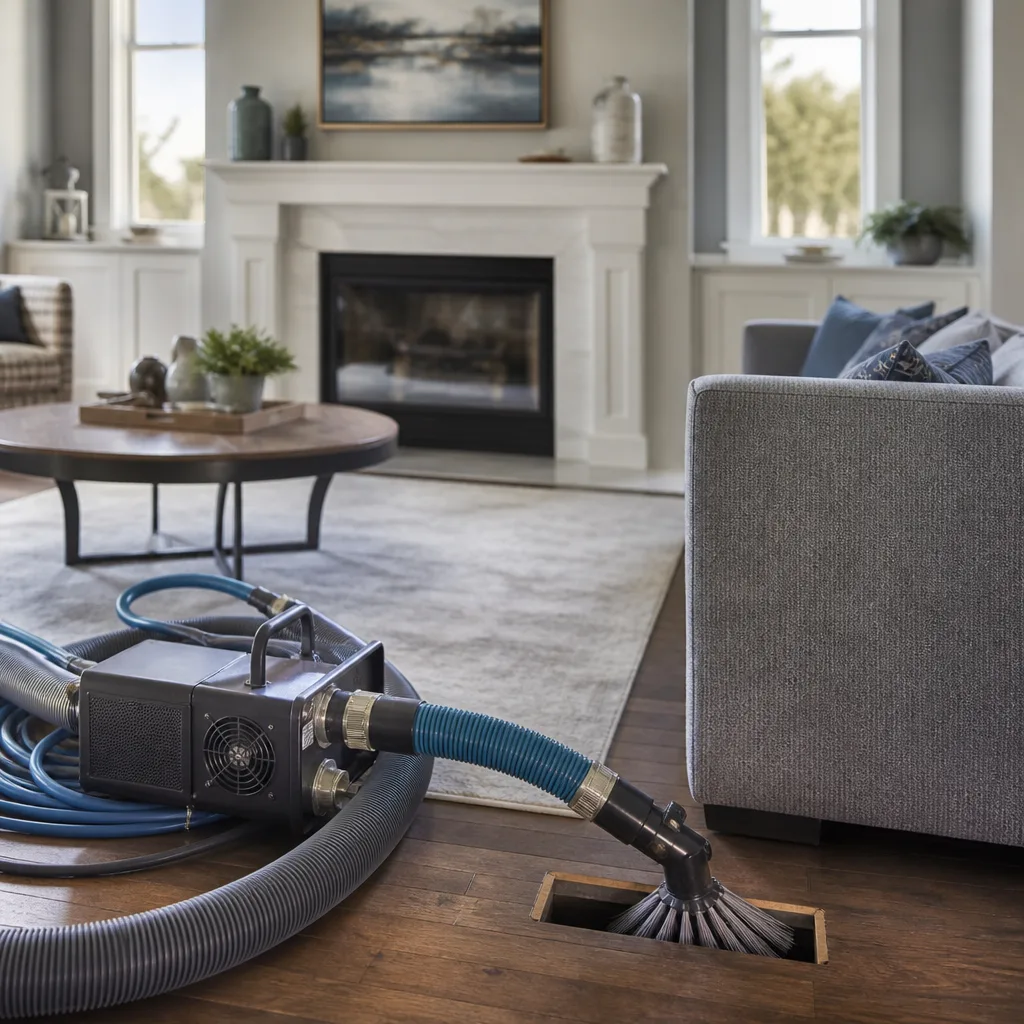 Whole-home duct cleaning
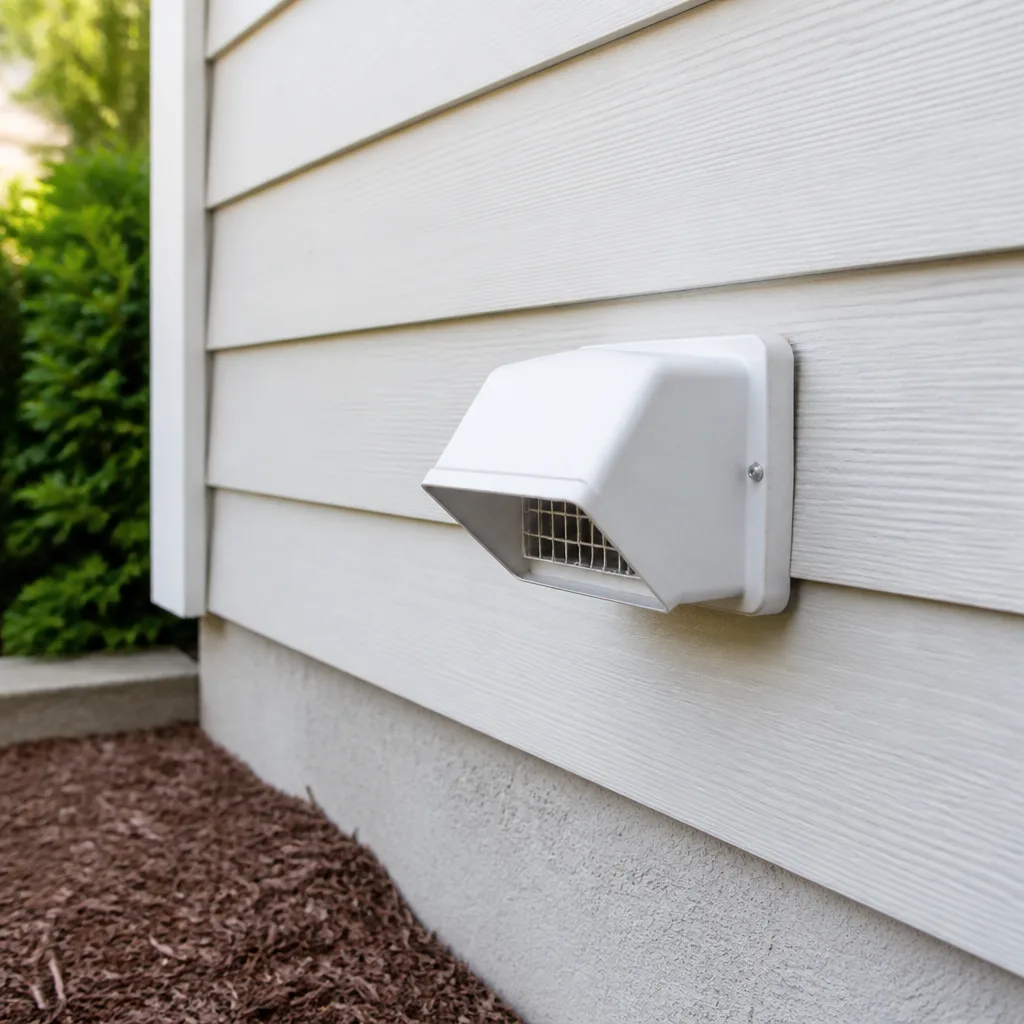 Dryer vent cleaning
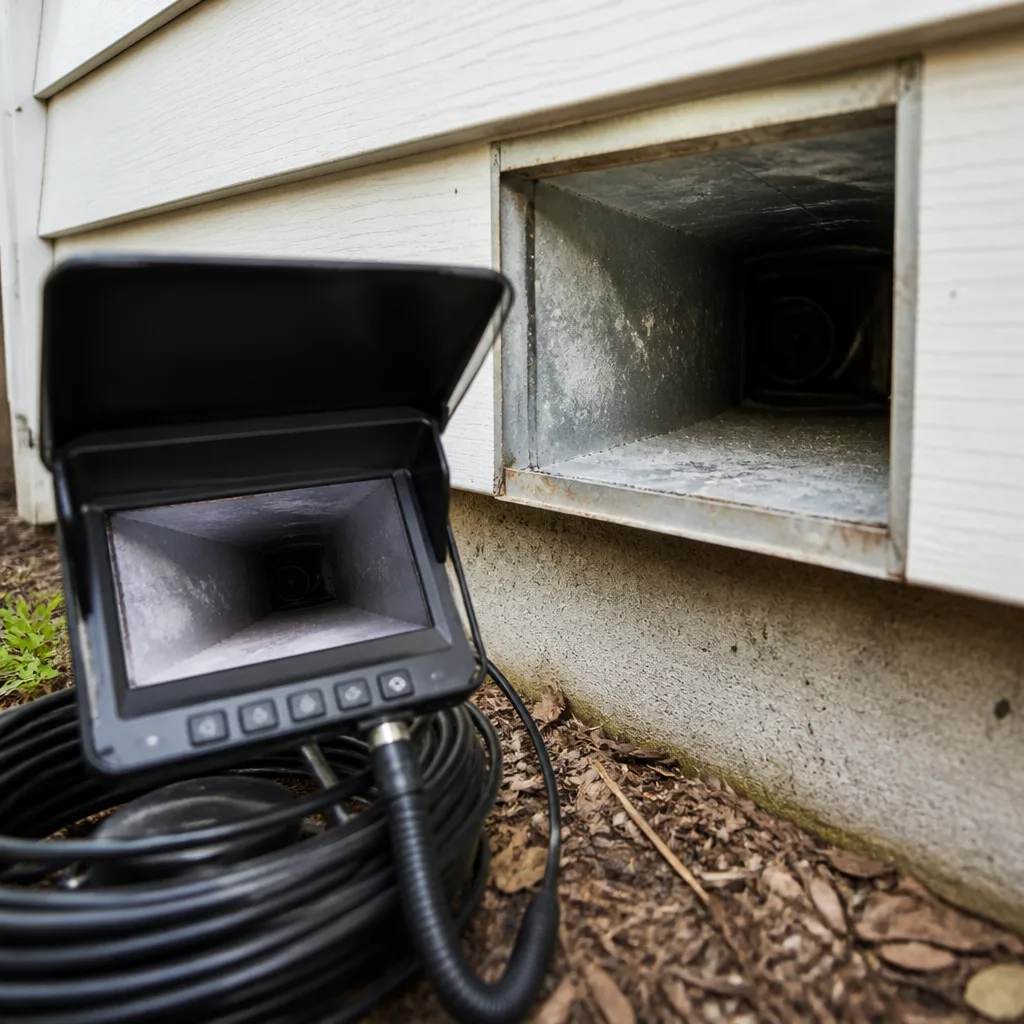 Camera inspection
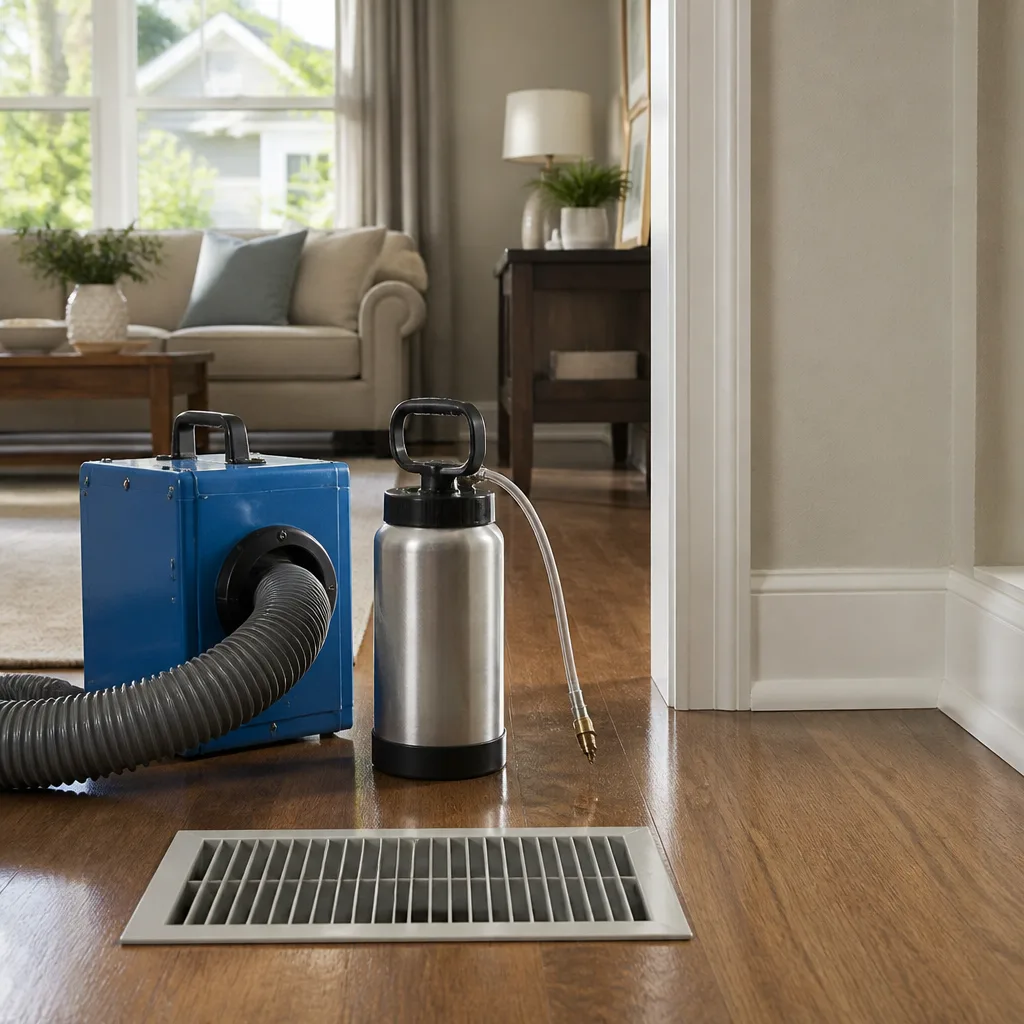 Sanitizing & deodorizing
Whole-system duct and dryer vent check with before-and-after photos - you see exactly what came out of your vents
That "$99 whole-house special" is a bait ad - the real number appears once they are in your hallway, or the "clean" is a shop-vac at the register. We photograph the inside of your ducts before and after instead.
The Complete Guide to Air Duct Cleaning in Co-op City
Most people assume a dirty duct is a private problem, contained behind their own vent covers. In a Co-op City high-rise, it doesn’t work that way. Air moves through shared risers and plenum chases that connect unit to unit, so contamination in one run gets recirculated through a mechanical system serving hundreds of households. The single biggest misconception we run into is that duct cleaning in Co-op City is the same job as duct cleaning in a standalone house. It isn’t. This guide maps the full process to the building infrastructure you actually live in, from the first inspection to the final clearance reading, so you know exactly what a legitimate job looks like and how to tell a real one from a coupon.
Quick Answer
Air duct cleaning in Co-op City means source-removal cleaning of the duct runs, plenum chases, and connected HVAC components serving your unit, using negative-air containment and rotary-brush equipment, followed by visual documentation and sanitizing where contamination warrants it. Because most Co-op City buildings share risers and mechanical chases, the scope is usually larger than a single apartment’s visible vents. A professional job always starts with a video inspection and ends with proof the debris was removed, not just disturbed.
Styles & brands we work with
- Whole-home duct cleaning
- Dryer vent cleaning
- Camera inspection
- Sanitizing & deodorizing
Table of Contents
- How Shared Riser Systems Change the Cleaning Scope
- The Equipment That Does the Work: Rotobrush, Nikro, and Abatement Technologies
- What a Pre-Cleaning Video Inspection Should Show You
- Why Negative-Air Containment Matters in a Dense Building
- The Full Process, Step by Step
- How to Verify the Job Was Actually Done
- What Air Duct Cleaning Costs in Co-op City and Why Quotes Vary
- How Often Ducts Really Need Cleaning
How Shared Riser Systems in Co-op City High-Rises Differ from Standalone Home Ductwork
In a detached house, ductwork is a closed loop that belongs to one family. In a Co-op City high-rise, the duct system is a shared piece of building infrastructure. Vertical supply and return risers run through stacked chases, and individual units tap into those risers through short branch runs and registers. That arrangement changes everything about how contamination behaves and how cleaning has to be scoped.
What that means in practice:
- Debris travels vertically. A run of dust and lint that builds up in a chase above your unit can settle into your branch line over time. Cleaning only your registers without addressing the branch connection leaves the source in place.
- Riser cleaning often needs building coordination. Cleaning a shared riser segment usually means notifying neighbors, sealing adjacent registers, and working with building management on access. Any company that quotes you without asking about this hasn’t done a Co-op City job.
- The plenum chase is part of the picture. Older plenum construction in these buildings develops gaps at seams and joints. Those gaps let unfiltered air bypass the filter entirely, which is why HVAC cleaning and sealing belong in the same visit as duct cleaning.
- Density amplifies the problem. With thousands of units sharing mechanical systems, fine particulate from one run gets recirculated broadly. The standard you’re cleaning to isn’t cosmetic.
Because the building is one of the largest cooperative housing developments anywhere, with more than 15,000 units sharing interconnected mechanical systems, the difference between a well-scoped job and a superficial one isn’t a comfort issue. It’s a question of whether the contamination source gets removed or merely pushed around.
The Equipment That Does the Work: Rotobrush, Nikro, and Abatement Technologies
The equipment stack is what separates a real cleaning from a shop-vac and a promise. Three tools do three different jobs, and a legitimate contractor should be able to tell you which one addresses which part of your HVAC system.
Rotobrush: mechanical contact cleaning
Rotobrush rotary-brush systems are contact-cleaning tools. The brush head physically scrubs the interior wall of the duct run, dislodging caked-on debris that air pressure alone can’t move. This is the same rotary-brush technology referenced in NADCA cleaning standards, and it matters because a duct that’s been vacuumed but not contact-cleaned still has a bonded layer of residue stuck to the walls.
Nikro: HEPA-rated capture at the source
Dislodging debris is only half the job. Nikro HEPA-rated vacuum equipment captures the loosened particulate rather than recirculating it into your living space. In a dense building where a cloud of dust in the hallway reaches your neighbors, capture at the source is not optional. The vacuum connects into the system and holds the debris under seal until it’s removed.
Abatement Technologies: post-cleaning air quality
Abatement Technologies air scrubbers handle the air-quality side of the job. After the mechanical work is finished, they scrub the air in the work zone and support sanitizing as a distinct phase rather than an afterthought. This is capability most residential duct cleaners simply don’t carry, and it’s why cleaning and sanitizing are two separate steps in a proper job.
Guardsman: sanitizing as its own step
Guardsman-backed antimicrobial sanitizing addresses microbial contamination once the physical debris is gone. It’s a separate service step, not bundled invisibly into base pricing. You should know whether you’re paying for sanitizing and what product is being used.
System familiarity matters too. Technicians trained on Aprilaire and Honeywell equipment recognize the whole-home air-quality components found in a lot of these installed systems, so the cleaning doesn’t accidentally harm what’s connected to your ducts. When you’re ready to book, you can start with air duct cleaning as the core service and add from there.
What a Pre-Cleaning Video Inspection Should Show You
No legitimate duct cleaning should begin without a video inspection first. The camera goes into the system, and the technician shows you the screen while it’s happening. If a contractor wants to quote based only on what they can see behind a register cover, ask for the inspection before you agree to anything.
Here’s what to watch for on the monitor, and how to read it yourself:
- Clear, lit footage of the actual duct interior. If the image is murky or the camera never goes past the first few feet, you’re not getting a real inspection.
- Visible debris depth. Light surface dust is normal. A visible mat of lint, hair, or construction residue on the duct floor signals the run needs cleaning.
- Plenum and chase condition. Watch for gaps, disconnected joints, or torn insulation at the plenum. Those are bypass points that let unfiltered air into the system.
- Moisture and staining. Any sign of water intrusion or dark staining needs to be flagged and addressed before cleaning, because moisture changes the scope of the job.
- Evidence of pests or nesting material. This is uncommon in high-rises but should be documented if found.
The inspection findings should map directly to the estimate. If the camera shows a loaded branch run in one Co-op City unit and a cleaner quote lists the same line items regardless of what the camera showed, the quote wasn’t built from the inspection. In our experience, a proper inspection takes enough time to actually look, and the findings become the scope.
Why Negative-Air Containment Matters in a Dense Building
Negative-air containment is the part of the process renters and owners rarely think about, and it’s the part that keeps your neighbors from noticing the job happened. The premise is simple: the work zone is held at lower air pressure than the surrounding space, so any dust loosened during cleaning is pulled into the collection system rather than drifting out into the hallway or into adjacent units.
In a Co-op City high-rise, adjacent occupied units are a few inches of wall away. A cleaner who works without containment, or with a shop-vac that isn’t sealed into the system, pushes fine particulate out of the return and into shared corridors. That’s why containment setup typically includes:
- Sealing all registers and grilles on the run being cleaned before work starts.
- Connecting the HEPA vacuum into the system so the entire run is under negative pressure during contact cleaning.
- Hanging zip-wall barriers at open work areas and doorways where appropriate.
- Coordinating with building management when shared riser work affects neighboring units.
If a company can’t explain how they contain debris during the job, they’re planning to spread it. Ask the question directly before you book.
The Full Process, Step by Step
Here’s what a complete, professionally scoped job looks like from start to finish. This is the sequence we work to, and it’s the one you should expect from any competent contractor.
- Walk-through and scope check. Identify every register, the branch runs feeding it, the plenum, and whether shared riser access is involved.
- Video inspection with findings documented. Camera into the system, footage reviewed with you on site.
- Containment setup. Seals on registers, HEPA vacuum connected, negative pressure established before cleaning starts.
- Contact cleaning with Rotobrush. Rotary brush works through each run, scrubbing bonded debris off the duct walls.
- Source removal with Nikro HEPA capture. Loosened material is pulled into the vacuum and removed from the building, not just moved downstream.
- HVAC component cleaning. Coils, blower, and cabinet get cleaned as part of the same visit when they’re part of the contamination path. This is where HVAC cleaning intersects with duct cleaning.
- Duct repair and sealing where needed. Gaps and disconnected joints at the plenum get sealed so unfiltered air stops bypassing the filter.
- Sanitizing as a distinct step. Guardsman-backed antimicrobial treatment applied where microbial contamination was documented.
- Post-cleaning air scrub. Abatement Technologies scrubbers clear the work zone, and final clearance readings are taken.
- Documentation handoff. Before-and-after photos of your own ducts, plus a summary of what was found and what was done.
That’s the “clean ducts, sealed ducts, tested air” sequence: there’s a beginning, a middle, and an end, and each phase produces evidence. If your dryer vent is also overdue, that’s a separate safety service best done in the same visit, and you can read about it under dryer vent cleaning.
How to Verify the Job Was Actually Done
You shouldn’t have to take a contractor’s word for it. A completed duct cleaning leaves measurable and visible evidence, and a legitimate company will hand it to you without being asked. This is the part of the guide that matters most if you’ve been burned before.
What to check:
- Before-and-after photos of your own ducts. Not stock images, not a brochure. Your run, your plenum, timestamped and matched to the inspection footage.
- Airflow readings. Airflow at the registers should be measured before and after. A meaningful change in reading is one indicator the restriction was removed.
- Visual check of the runs. Look into the registers with a flashlight after the job. Clean duct walls should reflect light; a bonded layer of residue means contact cleaning didn’t happen.
- Filter and register condition. Registers should be reinstalled clean, and your filter should be inspected and replaced if it was loaded during cleaning.
- Written summary of findings. What the inspection showed, what phase each run needed, and whether sanitizing was applied.
If a company can’t produce clear before-and-after documentation, the work is unverified. Ask for it at booking, so there’s no surprise at the end of the job.
What Air Duct Cleaning Costs in Co-op City and Why Quotes Vary
Air duct cleaning in Co-op City is priced per system, by a written estimate agreed before work starts. The range depends on how many runs are being cleaned, whether shared riser access is involved, whether HVAC components are included, and whether sanitizing is added as a separate step. There’s no per-vent price and no teaser coupon price worth trusting.
Typical estimated ranges for a whole-system job look like this:
- Standard residential duct cleaning (own-unit runs and plenum): typical range $350-$650, depending on number of runs and system size.
- Add HVAC component cleaning (coils, blower, cabinet): typically adds $150-$350 to the job.
- Duct repair and sealing (plenum gaps, disconnected joints): typically $200-$500 depending on how many points need sealing.
- Antimicrobial sanitizing (Guardsman step): typically $100-$250 for a whole-system treatment.
- Dryer vent cleaning done in the same visit: typically $100-$200, and it’s a safety service, not just an airflow one.
These are estimates only. The written estimate sets the final price, and the estimate should match the scope the video inspection actually revealed. Any quote that comes in far below the range above without an inspection to justify it is a quote you should ask hard questions about. Call (844) 443-4901 for an exact quote. Estimates are free.
How Often Ducts Really Need Cleaning
Ducts don’t have a fixed calendar. The honest answer is that a home’s ducts need cleaning when the inspection shows debris buildup, moisture, or microbial growth, not on a schedule someone mails you. For most Co-op City households, that means every few years at the outer end, and sooner if something changes.
Signs it’s time to have the system inspected:
- Visible dust streaking at registers or on the ceiling near the vent.
- A noticeable musty odor when the system kicks on.
- Recent renovation, painting, or repair work in the unit.
- A household member with allergies, asthma, or respiratory sensitivity that’s gotten worse at home.
- You’ve never had the system inspected and the building is older.
- You had a filter fail or a unit of the system run without a filter for a period.
Waiting too long in a shared-riser building isn’t a private trade-off. Overdue duct cleaning in Co-op City contributes to the particulate load that circulates through the building, and the correction is larger once the plenum needs sealing and the coils need cleaning in the same visit.
Common Mistakes to Avoid
- Booking on a coupon price with no inspection. A coupon-driven bait-and-switch starts when the crew arrives and raises the price before opening the first register. Ask for a video inspection and a written estimate before you commit.
- Cleaning only the visible registers. In a Co-op City high-rise, the registers are the smallest part of the system. The branch runs, plenum, and HVAC components carry most of the contamination.
- Letting a cleaner work without containment. No negative pressure means debris ends up in your unit and your neighbors’. Ask how the work zone is sealed before you book.
- Treating sanitizing as included without asking. Sanitizing is a distinct step with its own product and its own cost. Any bundling that hides it means you don’t know what you paid for.
- Skipping the plenum inspection. A gap at the plenum lets unfiltered air bypass the filter entirely. Cleaning a system that still leaks puts debris right back into the airflow.
- Accepting “it’s clean, trust us” without documentation. Photos of your own ducts, airflow readings, and a written summary are the minimum proof.
- Ignoring the dryer vent. Clogged dryer vents are a fire risk, not just a laundry inefficiency. Clean it in the same visit when it’s due.
See the difference
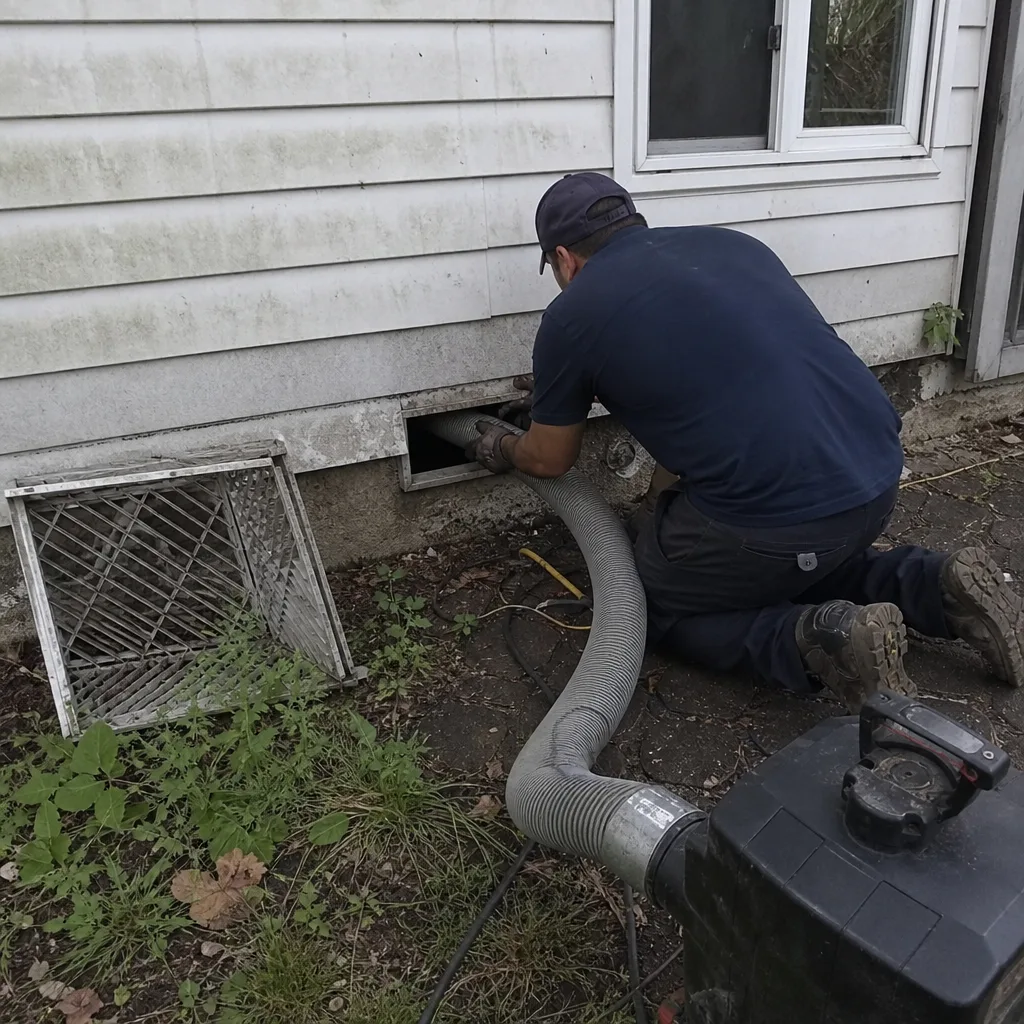 Before
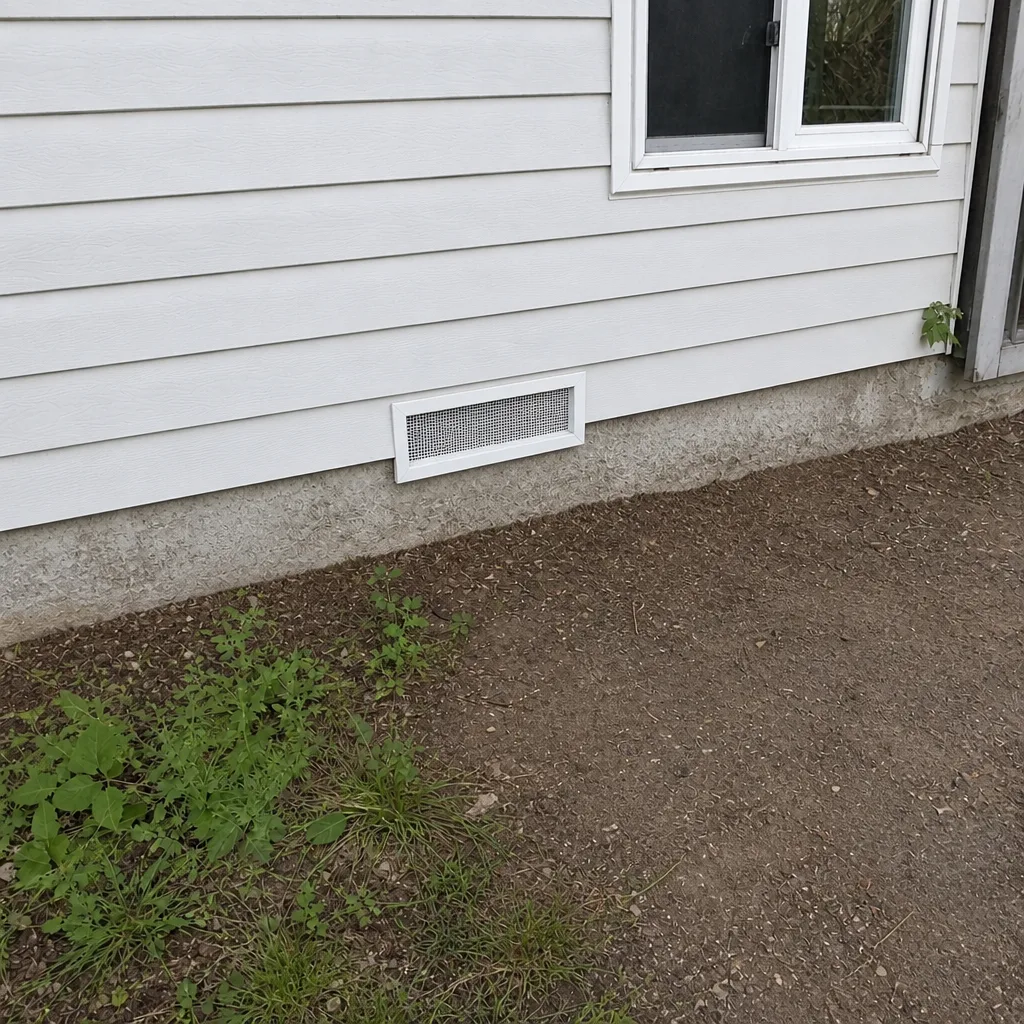 After
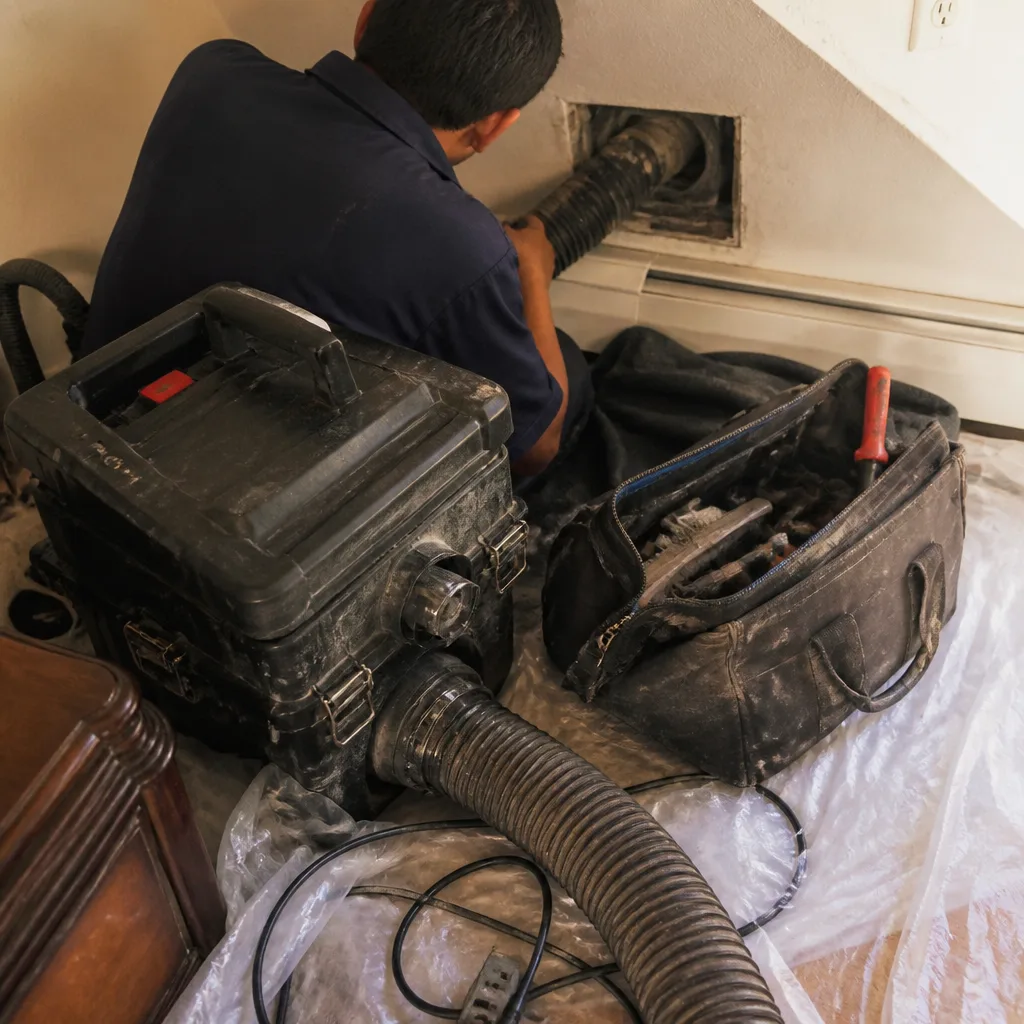 Before
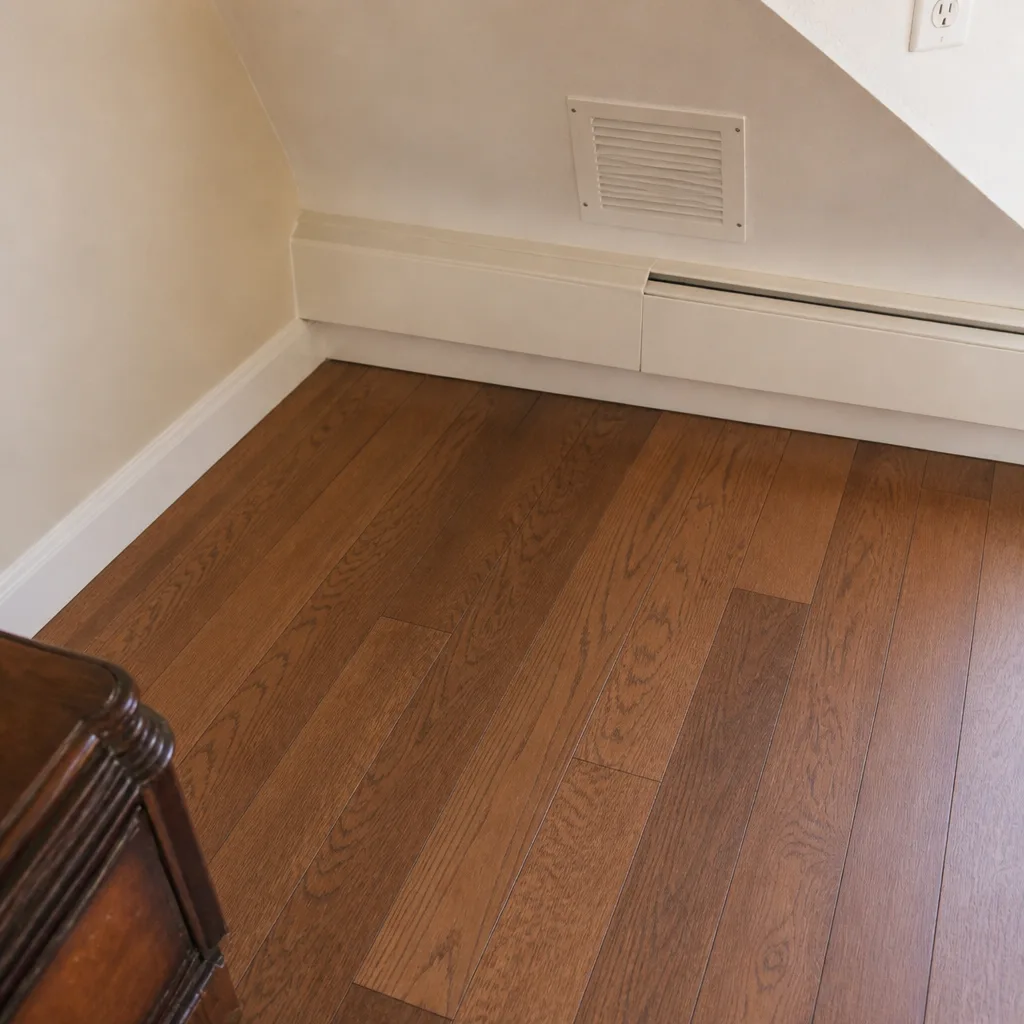 After
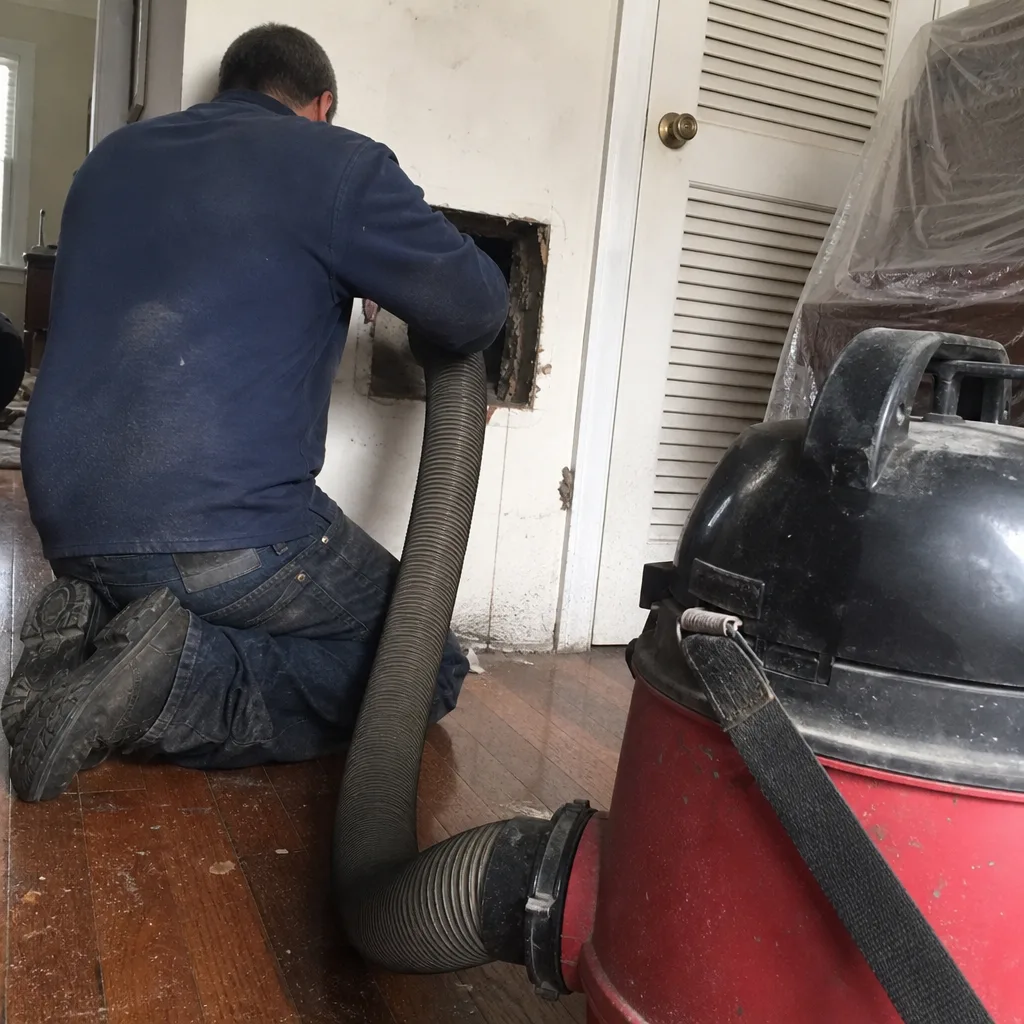 Before
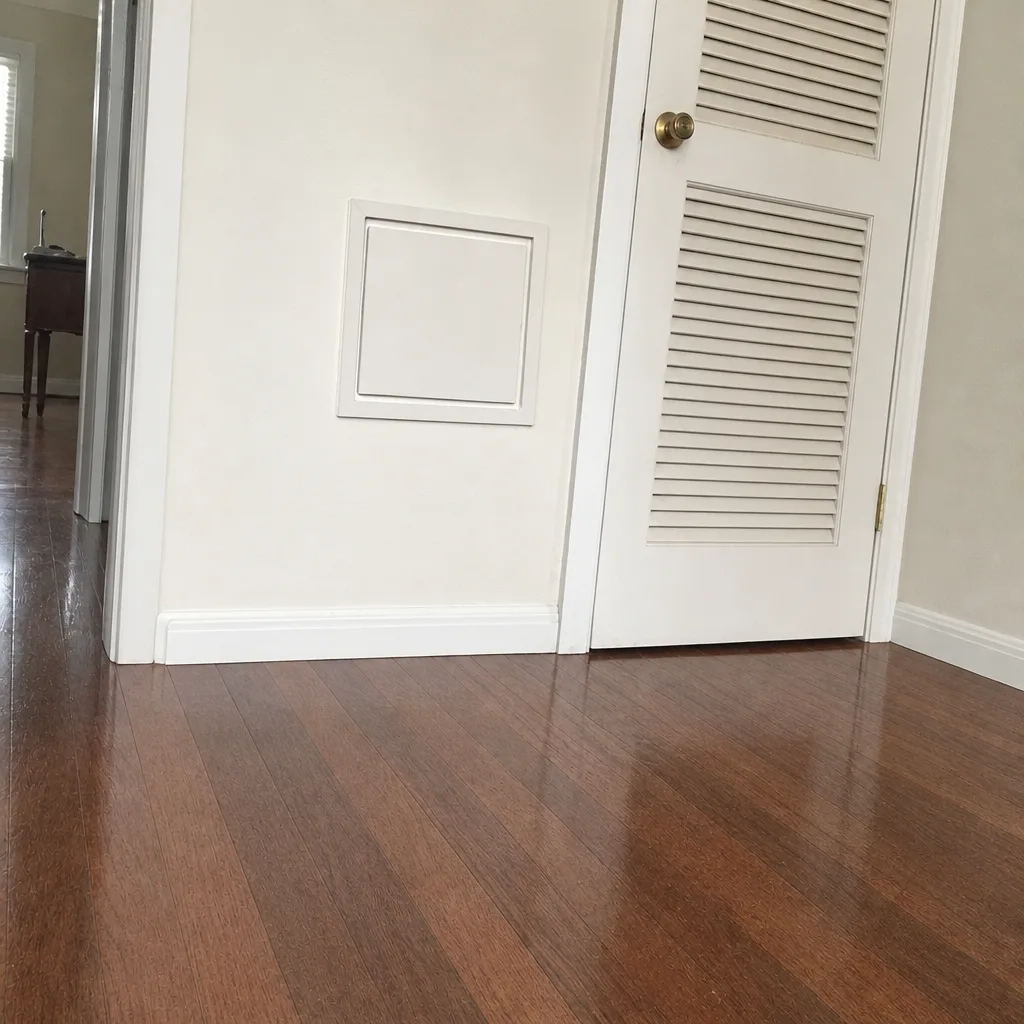 After
When to Call a Professional
Call a professional when the duct inspection points to real debris depth, when the plenum shows gaps or disconnected joints, when there’s a musty odor or documented microbial growth, or when someone in the household has allergies or asthma and the system has never been inspected. Also call if you’re coordinating shared riser work through building management, if a recent renovation dumped construction dust into the system, or if the dryer vent hasn’t been cleaned and the cycle time is getting noticeably longer. Air Duct Cleaning Co-op City offers free estimates in Co-op City. Call (844) 443-4901. We answer 24/7, and fast dispatch runs from 7am to 7pm, Sunday through Friday.
Frequently Asked Questions
Air duct cleaning in Co-op City typically runs $350-$650 for a whole-system residential job, with HVAC component cleaning adding around $150-$350, duct repair and sealing around $200-$500, and Guardsman sanitizing around $100-$250 when it’s warranted. The written estimate sets the final price. Call (844) 443-4901 for an exact quote. Estimates are free.
Cheap quotes usually skip the inspection, skip containment, or plan to clean only the visible registers. Cheaper also often means no HEPA capture, no rotary-brush contact cleaning, and no documentation. A quote that doesn’t include the scope the camera actually revealed isn’t a lower price for the same job. Call (844) 443-4901 for an exact quote. Estimates are free.
You know it was done when you have before-and-after photos of your own ducts, airflow readings before and after, and a written summary of what the inspection showed. You can also look into the registers yourself with a flashlight; clean duct walls reflect light and a bonded residue layer means contact cleaning didn’t happen. Ask for documentation at booking, so it lands at the end of the job. Call (844) 443-4901 for an exact quote. Estimates are free.
Yes. Shared risers and plenum chases mean cleaning often involves branch runs, the plenum, and coordination with building management for shared access. A company that quotes without asking about riser access hasn’t seen the job. Call (844) 443-4901 for an exact quote. Estimates are free.
Ducts need cleaning when the inspection shows debris depth, moisture, or microbial growth, not on a marketing schedule. For most Co-op City units, that means every few years, sooner after renovation or if someone has respiratory sensitivity. Call (844) 443-4901 for an exact quote. Estimates are free.
We clean the HVAC side as part of the same visit when the contamination path leads there: coils, blower, and cabinet get cleaned alongside the duct runs, and the plenum is sealed where gaps are found. That’s the whole point of whole-system thinking. Call (844) 443-4901. We answer 24/7. Fast dispatch from 7am to 7pm, Sunday through Friday.
The Bottom Line
Air duct cleaning in Co-op City isn’t a stand-alone house job. The shared risers, plenum chases, and density of the housing stock change the scope, and the only way to know what a system actually needs is a video inspection with documentation. A legitimate job starts with a camera, proceeds with negative-air containment and rotary-brush contact cleaning, removes debris through HEPA capture, seals what’s leaking, and ends with before-and-after proof. If a quote doesn’t fit that sequence, it’s probably a coupon. Call (844) 443-4901 to set up a free estimate and see your own ducts on the monitor before anything else happens.
Written by the team at Air Duct Cleaning Co-op City.